This three-part article series explains why tooth extractions are sometimes necessary and what patients can expect from this straightforward surgical procedure.
Welcome to the second installment of our three-part article series on tooth extractions, why they’re sometimes necessary and what New Jersey residents can anticipate for the experience. In our previous article post, we spoke to a panel of dental implants surgeons in Rutherford about why teeth extractions are sometimes recommended. The reasons discussed ranged from tooth decay and gum disease to orthodontic problems and problematic wisdom teeth. What was consistent was the preventative nature of such a procedure.
“Extracting teeth is done to prevent more complex oral and dental problems from developing; problems that are more painful and more expensive to fix further down the line,” explain the Rutherford dental implants surgeons. “Removing an impacted wisdom tooth prevents damage to the second molars and possible overcrowding of the dental arch if there isn’t enough space. Removing a decayed tooth can prevent painful abscesses from developing and it can prevent the spread of infection.”
Now, the question is... how are tooth extractions done?
Can you explain to us how you extract a problematic tooth? And what can you do to prevent a patient from feeling anything at all?
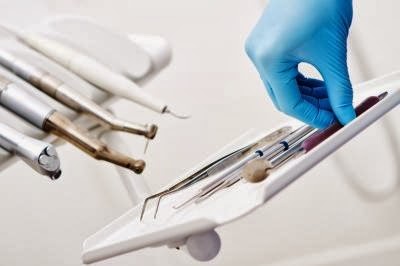
 “Before we even pick up a tool, we rub a topical anesthetic cream onto the gums where we intend to inject the numbing medication. The former prevents the latter from being painful and the latter prevents the procedure from being painful,” explains the dentist in New Jersey. “This way, patients typically have absolutely nothing to be afraid of… not even the needle used to administer anesthetic.”
“If you’re only having one or two teeth removed then we will begin the procedure from this point. If, however, you are having several or even all of your teeth removed – as is frequently the case with patients who present with advanced gum disease, then we may administer I.V. anesthesia to sedate you,” explain the dental implants surgeons in Rutherford. “This will make the patient ‘sleep’ and wake up when everything is already over. A general anesthetic may also be necessary for patients who have impacted wisdom teeth that haven’t, or aren’t able to erupt from the gums.”
Isn’t there a lot of blood? What do you do to calm the nerves of particularly anxious patients?

“Pulling a problematic tooth often provides relief to patients who have been enduring the pain and sensitivity associated with a decayed tooth or impacted third (wisdom) molar for months. Oftentimes, all patients really need to know is that they’re doing the right thing by having a damaged/diseased tooth extracted and that they are going to feel a lot better once it’s done,” explains the dentist in New Jersey.
“As for bleeding, it may be moderate at first, but by applying pressure to the area via a moist gauze pad immediately after extraction, it can be slowed or even stopped within a few minutes to hours. In some cases, we may stitch up the tooth socket or, if the patient is having a tooth replaced, we may continue with the dental implant procedure. If patients continue to experience bleeding for more than 24 hours after surgery, we encourage them to contact us immediately.”
Stay Tuned for Part 3
Stay tuned for the third installment of this three-part article series on tooth extractions, why they’re sometimes necessary and what patients can expect from the experience.

 What this idiom fails to elucidate is the fact that the modern procedures and techniques used to extract teeth nowadays are really no longer painful. In fact, dental extractions are in most cases one of the quickest, simplest and least painful of all the surgical procedures.
 “No quality dentist would remove a patient’s natural tooth without first being certain that there is nothing else that can be done to save it. You see, while dental implants (and the restorations they support) offer New Jersey residents a very sophisticated, functional and aesthetic solution to missing teeth, nothing on the market can rival your own biological technology.
  Traditional dental implant procedures could require as many as 10 implants per jaw in order to give patients a full set of new teeth again. The All-On-4®, as the name suggests, only requires four (see image below).
 Where many thousands of dollars are saved, however, is by the All-On-4’s ability to avoid the need for bone grafting surgery, which is highly invasive, painful and expensive. As stated, older dental implant protocols would frequently require more implants (so they thought) and hence bone grafting was often performed before a dental implant professional could even begin oral rehabilitation for a NJ patient.
 There are many approaches dentists can take to treating gum disease before they will consider giving New Jersey residents new teeth. Often a combination is used depending upon the extent of the disease and the damage it has already done. The first phase of treatment would be a thorough oral health assessment, followed by the recommendation of one or more of the following:
 Thankfully, if you have lost one or more of your teeth to gum disease, there is a suite of teeth replacement techniques available to help give you your smile back. Dental implants are typically the most highly recommended of these options because of their durability and better function and aesthetics.
 In the beginning stages, gum disease is known as gingivitis and can present with one or more of the following symptoms:
 Periodontal or gum disease is an advanced bacterial infection of the gums and the supporting structures of the teeth. It is caused by a lack of proper at-home and professional oral hygiene and comes hand-in-hand with risk factors such as:
 Tobacco use is one of the leading causes of gum disease and gum disease is the leading cause of tooth loss. Smoking also compromises the ability of patients to fight off infection and heal after dental work is done, so your best chance of keeping all of your natural teeth is to kick the habit!
 “Heavy drinking and drug abuse take as heavy a toll on the health of your teeth and gums as they do on your body,” explains a dental implants professional in New York. “Alcoholic beverages are almost always full of sugar and/or acid, which wears away at the dental enamel protecting your teeth. Alcohol also causes a condition known as ‘dry mouth’, which impedes the natural production of saliva. Saliva is a natural anti-bacterial, so people with frequent dry mouth tend to be more susceptible to tooth decay and gum disease. There are even some prescription medications that cause this condition so be sure to speak to your doctor about dosage or even a substitute if you experience this side effect.”